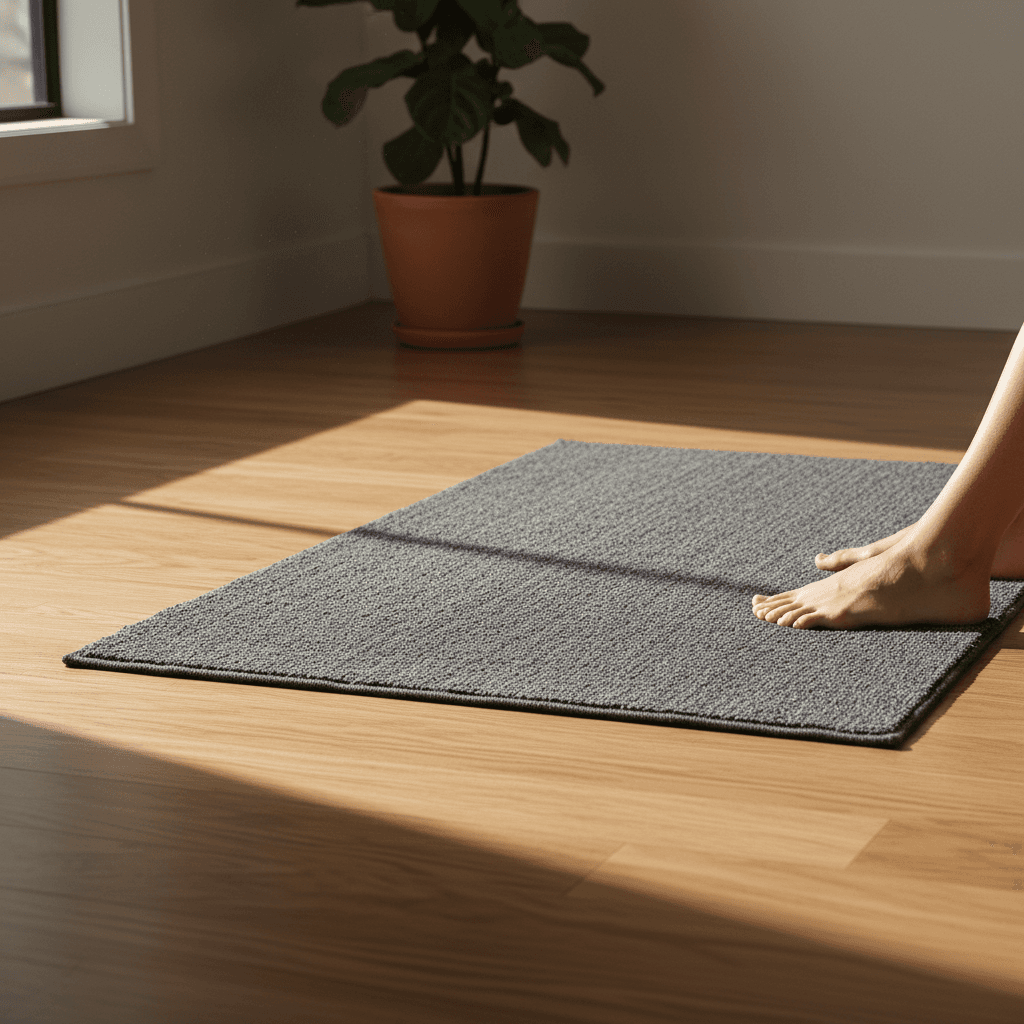
A grounding mattress pad is a conductive sleep surface connected to a correctly grounded outlet or a manufacturer-approved ground rod. Its electrical connection can be tested, but claims that it reliably improves sleep, pain, inflammation, circulation, or recovery are not supported by a strong body of independent clinical evidence.
This guide focuses on choosing, setting up, testing, and maintaining a pad without turning a measurable ground connection into an unproven medical promise.
Mattress pad, sleep mat, or grounding sheet?
Product names overlap, so compare construction rather than labels:
- Carbon sleep mat: a solid conductive surface placed on top of the mattress, often under one fitted sheet.
- Conductive mattress cover: a fitted or flat surface covering much of the bed.
- Grounding sheet: fabric woven with conductive silver or stainless-steel fibers.
- Small universal mat: covers only part of the bed and requires contact with that area.
The best format is the one that fits the mattress, maintains reliable contact, can be cleaned correctly, and does not create cable or pressure hazards.
What the pad actually does
A compatible cord connects the pad's conductive layer to electrical ground. Skin contact—or, for some products, contact through one thin slightly humid fabric layer—creates a measurable electrical path.
That does not show that electrons produce a clinical benefit. The FTC requires competent and reliable evidence for objective health claims and says testimonials cannot establish causation.
How to choose a grounding mattress pad
1. Complete safety system
Look for an outlet checker, product-compatible cord, and safety adapter with documented current-limiting protection. Avoid bare wires, improvised plugs, universal cords with unclear resistance, or instructions that require opening an outlet.
2. Fit and placement
Measure the sleep area, mattress depth, and intended contact zone. A fitted cover moves less than a small loose mat, but it costs more and requires more care. Check whether the connector will sit under the hip, near an adjustable-bed hinge, or where a pet can reach it.
3. Conductive material
Carbon mats are easy to wipe but can feel less breathable. Silver-fiber fabric feels more like bedding but is vulnerable to bleach, fabric softener, whitening agents, oils, and oxidation. Stainless-steel fibers may have different durability and washing instructions.
4. Verifiable testing
The seller should explain how to test the outlet, cord, and surface. A product tester is easier than a multimeter for routine checks. Replacement cords and testers should remain available.
5. Trial and warranty
Read the return deadline, hygiene exclusions, shipping cost, restocking fee, and whether the pad can be tried on the bed. Confirm whether the warranty covers the conductive surface, connector, cord, and controller separately.
How to set it up
- Inspect the pad, snap, cord, adapter, and tester for damage.
- Test the intended outlet using the exact checker instructions.
- If the outlet does not show the correct grounded result, do not use it. Try another or consult an electrician.
- Place the pad flat with the conductive side facing the sleeper.
- Route the cord away from walking paths, children, pets, and adjustable-bed mechanisms.
- Connect the approved adapter and cord.
- Test the surface before sleeping on it.
Current Earthing product directions tell users to test the outlet first and not use one that fails. Your manufacturer's manual controls if its setup differs.
Can it go under a fitted sheet?
Some sleep mats are designed to work under one thin cotton or bamboo fitted sheet after normal body moisture increases conductivity. Others require bare-skin contact. Thick protectors, waterproof barriers, fleece, and fully synthetic layers can block the path.
Follow the manual and verify the complete arrangement. Our guide to using a grounding mat under sheets covers testing and fabric choices.
Cleaning and care
Disconnect before cleaning. Wipe solid carbon mats with mild soap on a damp cloth, wipe away residue, and air-dry. Never machine-wash a solid mat unless the label explicitly allows it.
For conductive fabric, follow the exact wash instructions. Common rules are warm water, mild liquid detergent, low or line drying, and no bleach, whitening agents, fabric softener, dryer sheets, or oils. See how to wash grounding bedding.
Safety and medical limits
Stop for shocks, heat, odor, damaged insulation, skin irritation, or unexpected equipment behavior. Ask the product maker and clinician before use with implanted electronic medical devices. Do not combine it with powered bedding or medical electrical equipment unless both manufacturers permit the setup.
A mattress pad is not a treatment for chronic insomnia, sleep apnea, pain, or inflammatory disease. Persistent poor sleep, loud snoring with breathing pauses, severe daytime sleepiness, or ongoing pain needs appropriate evaluation.
Bottom line
Choose a grounding mattress pad for construction, testability, safe components, fit, care requirements, and return terms—not guaranteed health outcomes. Verify the outlet and surface, keep the cable safe, and treat any benefit as an individual experience rather than established therapy.
Found this helpful?
Get more sleep tips and product reviews delivered to your inbox.
Subscribe to 40 WinksRelated reading
How to Choose the Best Grounding Sheets for You
A comprehensive guide to grounding sheets — what to look for, how they work, and our top picks for every budget.
Grounding Mat Reviews: Do They Actually Work?
We tested the top grounding mats on the market. Here's what the science says and which ones are worth your money.
How to Test Your Earthing Sheet Is Actually Working
Don't just trust the marketing — here's how to verify your grounding sheet is properly connected and conducting.