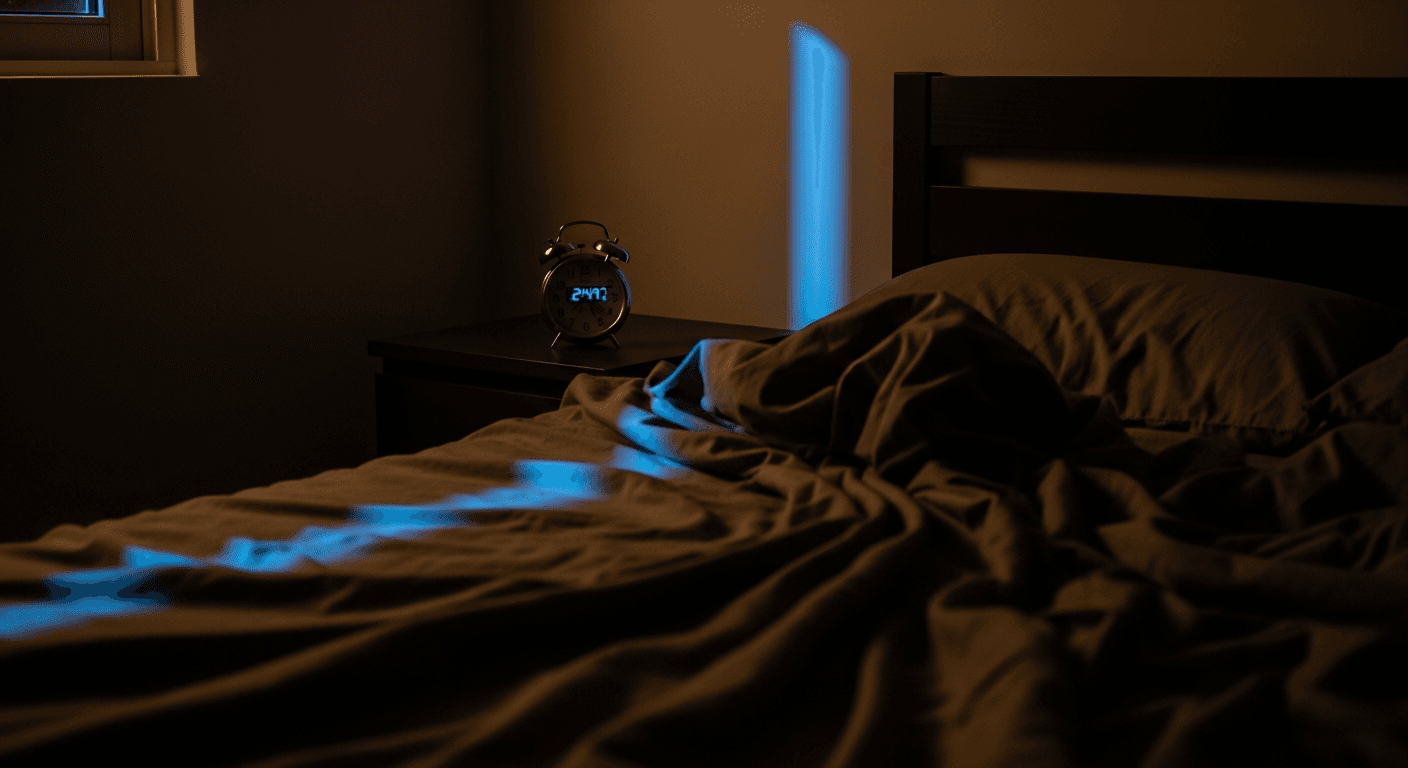
If you cannot sleep right now, stop trying to force it. Give yourself a quiet 15 to 20 minutes with the lights low, no clock checking, and one calming activity. If you remain awake and frustrated, leave the bed for a dim room and return only when you feel sleepy.
That approach is part of stimulus control, a behavioral strategy used in cognitive behavioral therapy for insomnia (CBT-I). It is more useful than hunting for a miracle supplement at 2 a.m., and it helps protect the mental association between bed and sleep.
A 20-minute reset for tonight
1. Hide the time
Turn the clock face away and put the phone out of reach. Calculating how many hours remain increases pressure and alertness. You do not need to know the exact minute to decide that you are becoming frustrated.
2. Release physical tension
Starting at the face and moving downward, gently tense one muscle group for a few seconds and then let it soften. Do not strain. Notice the difference between tension and release rather than grading whether you feel relaxed enough.
3. Slow the exhale
Breathe comfortably through the nose if possible. Let the exhale last a little longer than the inhale without holding your breath or chasing an exact count. Stop if you feel lightheaded. The objective is a quieter rhythm, not maximum lung capacity.
4. Use a neutral mental task
Picture a familiar route, name ordinary objects by category, or imagine a calm repetitive activity. Choose something engaging enough to interrupt worry but too dull to become stimulating.
5. Leave the bed if frustration keeps rising
Go somewhere dim and do a quiet activity such as reading a paper book or listening to calm audio. Avoid work, food preparation, social media, news, and bright overhead light. Return to bed when your eyelids feel heavy or you notice yourself losing the thread of what you are reading.
Why “trying harder” backfires
Sleep is not a task performed through effort. Repeatedly checking whether it is happening keeps attention fixed on wakefulness. Over time, long frustrated periods in bed can teach the brain that the bed is a place for worry, planning, and alertness.
Stimulus control reverses that pattern by reserving the bed for sleep and returning only when sleepy. It is one component of CBT-I, the treatment the National Heart, Lung, and Blood Institute describes as the usual first option for long-term insomnia.
What not to do during a bad night
- Do not keep scrolling. Content and social interaction are stimulating even with a warm screen setting.
- Do not start working. Productivity rewards wakefulness and can reinforce the pattern.
- Do not take an extra dose. Never exceed a prescription or over-the-counter label because the first dose feels slow.
- Do not use alcohol as a sleep tool. It may produce drowsiness but can fragment sleep later in the night.
- Do not drive when sleepy. If you must be somewhere, arrange another option.
- Do not catastrophize tomorrow. One poor night feels unpleasant, but predicting disaster increases arousal now.
Set up tomorrow night during the day
Keep a steady wake time
After a poor night, sleeping late can make it harder to feel sleepy at the next bedtime. Keep the wake time close to normal when it is safe to do so. If exhaustion creates a safety issue, prioritize safety and speak with a clinician.
Get morning light
Outdoor light after waking helps anchor circadian timing. The amount needed varies with season, location, and individual sensitivity, but a morning walk is a practical way to combine light with gentle activity.
Use caffeine strategically
Caffeine can remain active for hours. If falling asleep is a recurring problem, move the last serving earlier and remember that coffee, tea, energy drinks, chocolate, pre-workout products, and some medicines all contribute.
Build enough sleep pressure
Long or late naps reduce the drive to sleep at night. If a nap is necessary for safety or function, keep it earlier and brief rather than letting it become a second sleep period.
Create a repeatable wind-down
Choose a short sequence you can repeat: dim lights, prepare the room, handle essential tasks, and do one quiet activity. A routine works as a cue; it does not need expensive products or perfect execution.
Common reasons a quick reset is not enough
Schedule mismatch
Shift work, jet lag, irregular weekends, and very early bedtimes can put attempted sleep outside the body's current sleep window. Timing interventions such as light and melatonin can be useful in specific situations, but incorrect timing can make the problem worse. Seek individualized guidance for persistent circadian problems.
Pain, reflux, breathing, or movement symptoms
Discomfort, coughing, reflux, restless legs, hot flashes, breathing pauses, and repeated movements need attention beyond sleep habits. Treating the underlying issue may matter more than another relaxation technique.
Medication or substance effects
Stimulants, decongestants, steroids, some antidepressants, nicotine, alcohol, cannabis, and medication timing can affect sleep. Do not stop a prescription abruptly; review the complete list with a clinician or pharmacist.
Anxiety, depression, or acute stress
Sleep and mental health influence each other. Persistent racing thoughts, panic, low mood, trauma symptoms, or major life stress deserve appropriate support rather than self-blame.
When trouble sleeping becomes insomnia
The NHLBI describes chronic insomnia as difficulty falling asleep, staying asleep, or obtaining good-quality sleep at least three nights per week for more than three months, despite adequate opportunity. A clinician may ask you to keep a sleep diary and check for other sleep or medical conditions.
CBT-I is a structured program, usually delivered across several sessions. It combines sleep education with strategies such as stimulus control, sleep restriction, cognitive work, and relaxation. Sleep hygiene alone is not the same treatment.
Get help promptly when safety is involved
Contact a healthcare professional if sleep problems persist, significantly affect daytime function, or occur with loud snoring, gasping, breathing pauses, unusual movements, severe pain, or medication concerns. Seek urgent help for thoughts of self-harm, mania, severe confusion, chest pain, breathing difficulty, or another acute medical problem.
Bottom line
Tonight, reduce the struggle: hide the time, relax without grading yourself, and leave the bed for a quiet dim activity if frustration builds. Tomorrow, protect a stable wake time and address the pattern rather than compensating wildly. If the problem is frequent or prolonged, CBT-I and a proper evaluation offer more than any “fast fix.”
Sources and further help
Found this helpful?
Get more sleep tips and product reviews delivered to your inbox.
Subscribe to 40 WinksRelated reading

9 Evidence-Based Ways to Reduce Inflammation Risk
Replace inflammation hacks with nine practical steps covering diagnosis, food, activity, metabolic health, sleep, smoke, alcohol, oral care and stress.

Why Can't I Sleep?: 5 Reasons AND 19 Solutions
Getting enough sleep may be the single most important thing you can do for your body.This is why we have put together the ultimate guide to creating your personal sleep cocoon that you can use to get to sleep faster, sleep better and maximize your health!
Chronic Insomnia Treatment: CBT-I, Sleep Aids & Safety
CBT-I is usually the first-line treatment for chronic insomnia. Compare behavioral treatment, prescription medicines, OTC aids, melatonin, and supplements.