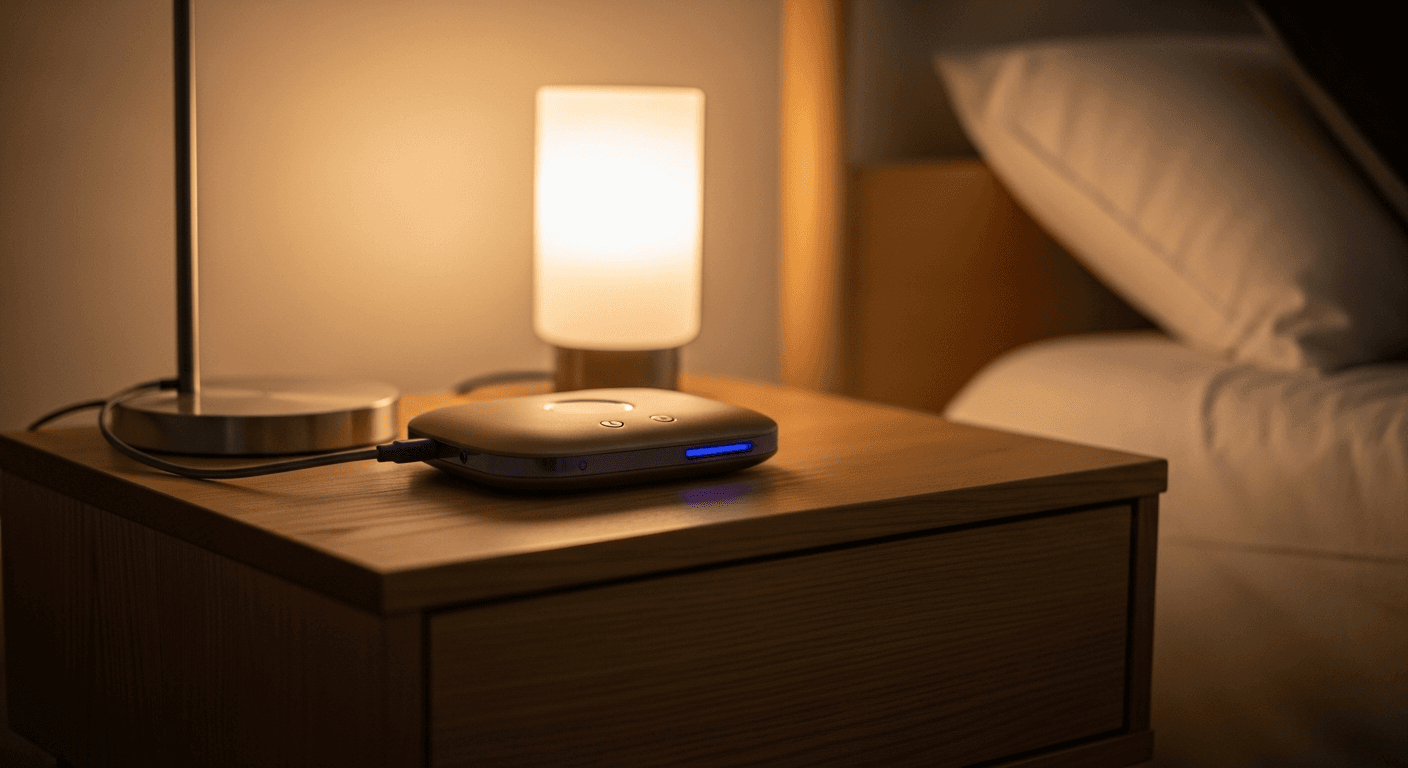
PEMF therapy uses coils to create time-varying electromagnetic fields near the body. Specific PEMF and pulsed-shortwave devices have legitimate medical uses, including certain prescription bone-growth stimulators and cleared devices for particular pain indications. That does not mean every consumer mat is FDA-cleared or that PEMF has been proven to improve sleep, “detox” the body, increase energy, or treat a long list of diseases.
The device, signal, intended use, and evidence must match. “PEMF” describes a broad technology family, not one standardized treatment.
What does PEMF stand for?
PEMF stands for pulsed electromagnetic field. Electric current passes through a coil in pulses, creating a magnetic field that changes over time. That changing field can induce small electric fields in nearby conductive tissue.
Devices vary enormously in frequency, field intensity, waveform, pulse width, duty cycle, coil shape, treatment area, and session duration. A low-frequency whole-body wellness mat is not interchangeable with a prescription bone stimulator or a radiofrequency pulsed-shortwave pain wrap.
FDA-cleared uses are device-specific
The U.S. Food and Drug Administration classifies noninvasive bone-growth stimulators as prescription devices used alongside primary treatment for selected nonunions, failed fusions, fracture fixation, or spinal fusion. Some use pulsed electromagnetic fields; others use different electrical, magnetic, or ultrasound technologies.
The FDA also has a Class II category for nonthermal pulsed electromagnetic energy devices intended for over-the-counter pain treatment. The agency's classification page specifies pulsed energy at 13.56 or 27.12 MHz and warns against applying the device directly over active implants.
Clearance belongs to the named device for the exact indication in its labeling. It does not transfer to all PEMF products, all frequencies, or unrelated claims. The FDA explains that a 510(k) clearance generally shows substantial equivalence to a legally marketed predicate; it is not permission to advertise any health benefit imaginable.
What does clinical research show?
PEMF has been studied for musculoskeletal pain, osteoarthritis, bone healing, postoperative recovery, and other uses. Results depend on the condition and device parameters.
Reviews of knee osteoarthritis trials illustrate the uncertainty. Some meta-analyses report short-term improvements in pain or function, while others find no meaningful advantage for pain. An umbrella review of systematic reviews found the most agreement for short-term pain reduction but emphasized small samples, heterogeneous protocols, and generally low-to-medium study quality. That does not establish that a home mat treats osteoarthritis.
Evidence for sleep, anxiety, depression, immune function, circulation, “cellular energy,” and generalized recovery is less established and should not be inferred from orthopedic studies. A study of one signal and condition cannot validate a different device and claim.
What does a session feel like?
Many low-intensity PEMF devices produce little or no sensation. Higher-intensity magnetic stimulation may cause muscle twitching, tapping sensations, or discomfort. Products that combine PEMF with heat, vibration, red light, or crystals can feel warm or relaxing, but that sensation comes from the added feature and does not demonstrate a PEMF effect.
Who should get medical advice first?
Ask the device manufacturer and an appropriate clinician before use if you have a pacemaker, implantable cardioverter-defibrillator, neurostimulator, insulin pump, cochlear implant, implanted medication system, or another active electronic implant. Also seek advice during pregnancy, after recent surgery, with uncontrolled seizures, active bleeding, cancer treatment, or when using the device over growth plates in children.
Contraindications differ by device. The product's cleared labeling and manual—not a generic online list—are the controlling safety sources. See our detailed guide to PEMF side effects and precautions.
How to evaluate a PEMF claim
- Identify the exact manufacturer, model, and intended use.
- Ask for the FDA 510(k), PMA, or De Novo number if clearance or approval is claimed.
- Look up that number in the FDA database and compare the official indication with the advertisement.
- Check whether cited studies tested the same device, signal, condition, and outcome.
- Distinguish symptom relief from treatment of an underlying disease.
- Reject claims based only on testimonials, cell studies, animal research, or unrelated devices.
The FTC requires competent and reliable evidence for objective health claims. Words such as “may,” “supports,” or “wellness” do not rescue an otherwise misleading promise.
PEMF versus other magnetic therapies
Static magnetic bracelets do not pulse and are a different category. Transcranial magnetic stimulation uses high-intensity, focused magnetic pulses under medical supervision for specific neurological or psychiatric indications. MRI uses powerful static and changing fields for imaging. Shortwave diathermy may produce thermal or nonthermal effects at radio frequencies. These technologies should not be grouped together as evidence for a consumer mat.
Bottom line
PEMF is a real physical technology with some device-specific medical uses and a growing but inconsistent research literature. Evaluate the exact product and exact claim. A cleared bone stimulator or pain device does not validate broad wellness promises from a different home system.
Found this helpful?
Get more sleep tips and product reviews delivered to your inbox.
Subscribe to 40 WinksRelated reading
PEMF FAQ: Evidence, FDA Status, Safety & Cost
Straight answers about PEMF evidence, FDA clearance, pain and sleep claims, frequency, session length, implants, insurance, cost, and misleading marketing.

How to Choose a PEMF Device Without Falling for Hype
Compare PEMF devices by verified intended use, FDA status, signal specifications, product-matched evidence, safety labeling, trial terms, and warranty.

PEMF Frequencies Explained: Why Hertz Is Not a Prescription
Frequency is only one PEMF parameter. Learn how intensity, waveform, duty cycle, coils, and exposure time affect a protocol—and why benefit charts mislead.