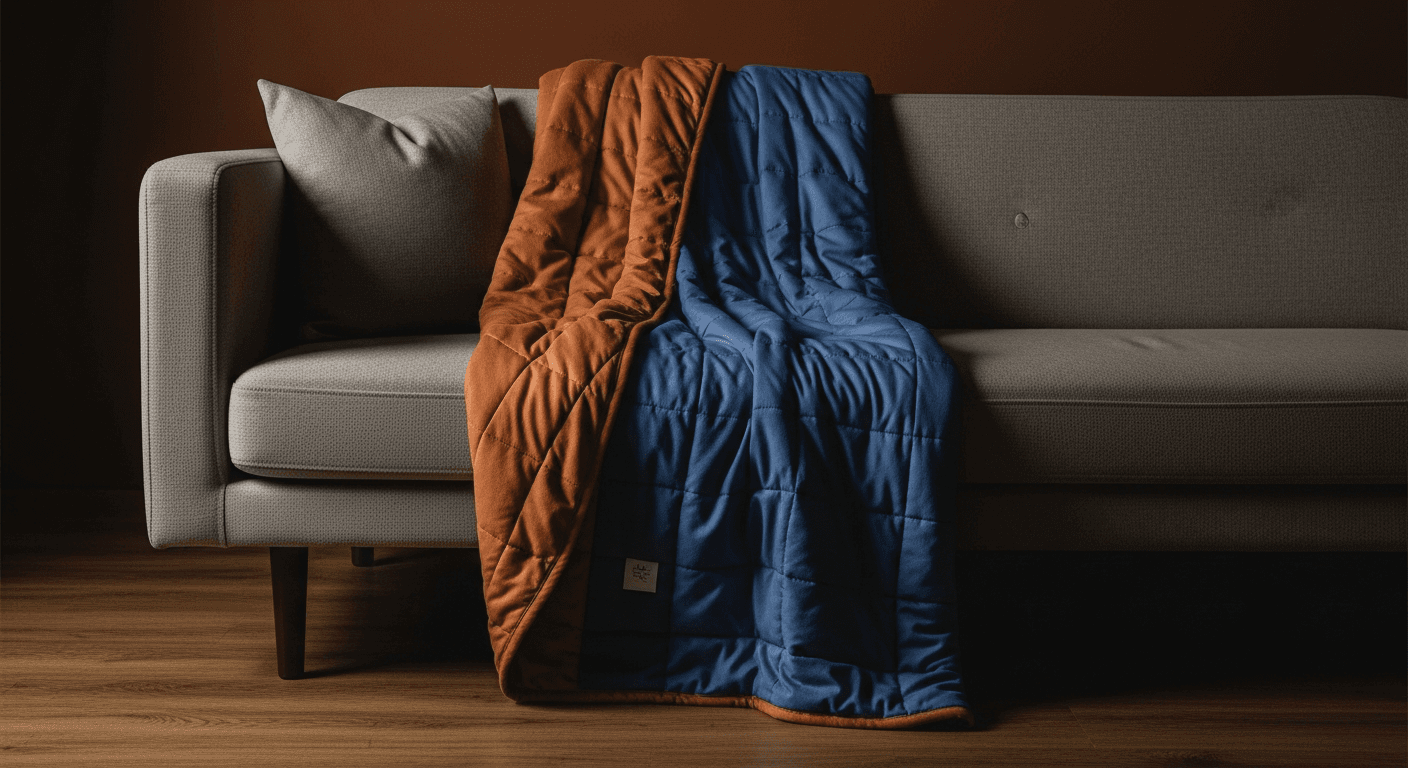
A grounding blanket's clearest practical benefit is convenience: it provides a larger, flexible conductive surface for resting without lying directly on a solid mat. The electrical connection can be tested. Claims that grounding blankets reliably improve sleep, pain, inflammation, anxiety, circulation, immunity, or energy remain unproven.
This distinction makes it possible to compare blankets honestly—as conductive textiles—without presenting a comfort product as medical treatment.
What is a grounding blanket?
A grounding blanket or throw contains conductive fibers, commonly silver or stainless steel, connected to a snap and cord. The cord attaches to a safety adapter in a correctly grounded outlet or to a compatible ground rod. Skin must touch the conductive portion, directly or as the manufacturer's instructions allow.
Some products are conductive on only one side. Current Earthing throw instructions, for example, say the silver-thread side must face the skin and the soft reverse side does not ground the user. Designs vary, so identify the active surface before use.
Practical benefits compared with other products
Flexible placement
A throw can sit across legs on a sofa, wrap loosely around shoulders, or lie over part of a bed. That can be more convenient than maintaining contact with a small desk mat.
Large contact area
A blanket can provide more potential contact than a foot mat or adhesive patch. More area does not prove greater health benefit, but it may make the electrical connection easier to maintain while changing position.
Familiar feel
Conductive fabric can feel more like ordinary bedding than a carbon or polyurethane mat. Comfort depends on fiber blend, weave, weight, breathability, seams, and connector placement.
Portability
Throws fold for travel, although a different country, hotel, RV, boat, or generator may not provide a compatible verified ground. Never assume an outlet is safe because the plug fits.
What health research can and cannot say
Grounding studies include small trials and physiological measurements, but the literature is not large, independently replicated, or standardized enough to establish a grounding blanket as treatment for insomnia, inflammation, chronic pain, anxiety, cardiovascular disease, or immune dysfunction.
Personal reports can be sincere and still reflect natural symptom variation, expectation, relaxing quietly, warmth, changed routines, or other factors. The FTC states that testimonials do not substantiate health claims.
How to choose a grounding blanket
- Conductive coverage: ask what percentage and which side of the textile conducts.
- Material: compare silver, stainless-steel, cotton, and synthetic blends for feel and care.
- Complete kit: outlet checker, current-limiting adapter, compatible cord, and instructions should be included or clearly specified.
- Connector placement: it should not press into the body or catch during movement.
- Washability: read the full care label before purchase.
- Testing method: the manufacturer should explain how to verify the blanket and cord.
- Return policy: check hygiene exclusions and return shipping.
- Warranty: confirm whether loss of conductivity is covered.
For product comparisons, see our broader grounding blanket buying guide.
Who might prefer another format?
A solid mat may suit someone who wants simple wipe-clean maintenance at a desk. A conductive sheet can offer more stable nightly coverage, while patches provide small direct-contact points. People who dislike special laundry care, loose bedding, or cords near a sofa may find a blanket inconvenient. Choose for the routine you will actually maintain.
Setup
- Inspect the blanket, snap, cord, adapter, and outlet tester.
- Test the receptacle and stop if it does not show the correct grounded pattern.
- Connect only the approved adapter and cord.
- Place the conductive side against bare skin or use only the fabric layer permitted by the manual.
- Keep the cable out of walkways and away from children, pets, reclining mechanisms, and bed frames.
- Use a compatible product tester to confirm conductivity.
Washing and conductive life
Silver-fiber blankets commonly require warm water, mild liquid detergent, and line drying or low tumble drying. Bleach, oxygen whiteners, fabric softener, dryer sheets, strong fragrance oils, and body lotion can coat or damage conductive fibers.
Earthing's current throw directions recommend warm washing and prohibit bleach, softener, whitening detergent, oil-containing detergent, and dryer sheets. Your own care label takes priority. Regular washing can remove perspiration and skin oils rather than shorten life when done correctly.
Retest after washing and complete drying. Discoloration alone does not prove failure, and a clean appearance does not prove the blanket still conducts.
Safety
Do not use damaged cords, loose snaps, improvised outlet connections, or a receptacle that fails testing. Ask before combining the blanket with an electric blanket, heating pad, adjustable bed, or implanted electronic medical device. Stop for shocks, heat, odor, skin irritation, or damaged insulation.
Bottom line
A grounding blanket can be a comfortable and flexible way to maintain a testable ground connection. Buy it for construction, comfort, care, safe components, and return terms—not a list of guaranteed medical benefits.
Found this helpful?
Get more sleep tips and product reviews delivered to your inbox.
Subscribe to 40 WinksRelated reading
How to Choose the Best Grounding Sheets for You
A comprehensive guide to grounding sheets — what to look for, how they work, and our top picks for every budget.

Grounding Mat Reviews: Do They Actually Work?
We tested the top grounding mats on the market. Here's what the science says and which ones are worth your money.
How to Test Your Earthing Sheet Is Actually Working
Don't just trust the marketing — here's how to verify your grounding sheet is properly connected and conducting.