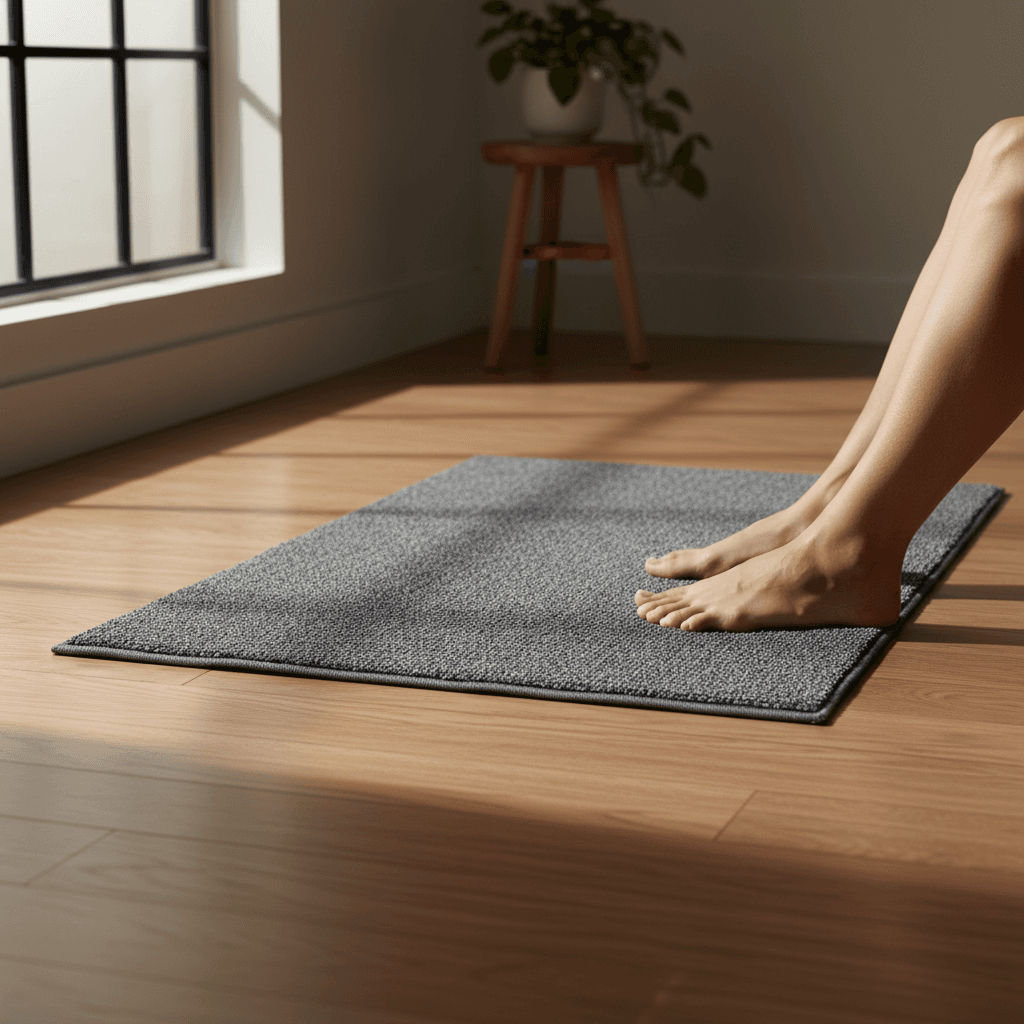
There is no clinically established “dose” of grounding and no good evidence that users must gradually adapt to a flow of negative energy. Many products are designed for extended contact, including overnight use, but comfort, skin condition, cable safety, product integrity, and individual medical circumstances still matter.
If you feel worse, do not assume it is detoxification or a healing crisis. Stop, check the setup, and consider other causes.
Is there a maximum number of hours?
No universal maximum has been established across products. A desk mat used for 30 minutes and a sleep mat used overnight have different contact patterns. Follow the manual's session and use limits.
More time has not been proven to produce more health benefit. The goal should be a safe, comfortable routine, not maximizing hours or stacking several grounding products.
What might feel like “too much”?
- skin redness, itching, sweating, pressure marks, or adhesive irritation;
- sleep disruption caused by heat, texture, cable placement, or expectation;
- headache, dizziness, tingling, fatigue, or anxiety;
- worse pain from lying or sitting in one position;
- a trip, entanglement, or pinched-cord hazard;
- shocks, heat, odor, or other signs of equipment or wiring trouble.
These symptoms are nonspecific. They do not demonstrate that the body is releasing toxins, absorbing excessive electrons, or undergoing a beneficial adjustment.
What to do if symptoms occur
- Disconnect the product and stop using it.
- Inspect the mat, cord, adapter, and outlet tester.
- Consider other changes in sleep, medication, caffeine, alcohol, activity, illness, hydration, and stress.
- Seek medical advice for persistent, significant, or recurring symptoms.
- If you try again, use a shorter comfortable session without changing other variables.
Do not push through chest pain, fainting, severe shortness of breath, new weakness, a serious allergic reaction, a burn, or signs of electrical malfunction.
Skin and pressure exposure
Extended contact can trap heat and moisture or put pressure on one area. Clean the surface as directed, change position, and allow irritated skin to recover. Adhesive patches have specific wear-time limits and should not be moved repeatedly over damaged skin.
People with diabetes, neuropathy, poor circulation, fragile skin, or reduced mobility should take particular care because they may not notice pressure, heat, or skin injury promptly.
Overnight use
A sleep mat can be used overnight only when its manufacturer permits it, the outlet and product test correctly, and the cable is safely routed. Keep the snap away from pressure points and the cord away from the neck, children, pets, and adjustable-bed mechanisms.
Do not combine a grounding mat with an electric blanket, heating pad, or medical electrical equipment unless both manufacturers explicitly permit the combination.
Medications and medical devices
Grounding should not be used to change medication doses. Sellers sometimes make claims about blood viscosity or blood pressure, but general consumer mats have not been shown to replace anticoagulants, antihypertensives, diabetes medicines, or other care.
Ask the grounding product manufacturer and the clinician managing a pacemaker, defibrillator, insulin pump, neurostimulator, or other implanted electronic device before use.
Can you use multiple products at once?
There is no established clinical benefit to combining a mat, sheet, patches, and blanket. Multiple cords increase complexity, trip risk, pressure points, and opportunities for incompatible components. Use one verified setup unless the manufacturer explicitly supports a particular combination.
Cleaning and retesting during frequent use
Daily contact leaves perspiration, skin oils, lotion, dust, and cleaning residue on the conductive surface. Disconnect the product and clean it on the schedule and with the method in its manual. Solid mats commonly need mild soap, a damp cloth, residue removal, and complete air drying.
Retest the outlet and product periodically, after moving the setup, after cleaning, and whenever damage is suspected. Frequent hours on a mat do not help if residue or a loose connector has interrupted conductivity. Never use harsher chemicals or soak electrical connectors to restore a failing reading.
A reasonable personal-use plan
If you choose to try a mat:
- verify the outlet and surface;
- begin with a short session during the day;
- track one outcome rather than scanning for every sensation;
- increase time only for convenience and comfort, not because more is assumed better;
- retest periodically and after damage, cleaning, or moving the setup;
- stop if no meaningful benefit justifies the inconvenience before the return period ends.
What the evidence does not show
Research has not defined an electron dose, adaptation period, withdrawal syndrome, or toxicity threshold for consumer grounding. It also has not established that initial worsening predicts later benefit. The FTC requires reliable evidence for objective health and safety claims.
Bottom line
You do not need to “build tolerance” to grounding. Use the product only as directed and only while it remains comfortable and safe. Symptoms are a reason to stop and investigate—not proof that the mat is working.
Found this helpful?
Get more sleep tips and product reviews delivered to your inbox.
Subscribe to 40 WinksRelated reading
How to Choose the Best Grounding Sheets for You
A comprehensive guide to grounding sheets — what to look for, how they work, and our top picks for every budget.
Grounding Mat Reviews: Do They Actually Work?
We tested the top grounding mats on the market. Here's what the science says and which ones are worth your money.
How to Test Your Earthing Sheet Is Actually Working
Don't just trust the marketing — here's how to verify your grounding sheet is properly connected and conducting.